
Drain Relining Rainham
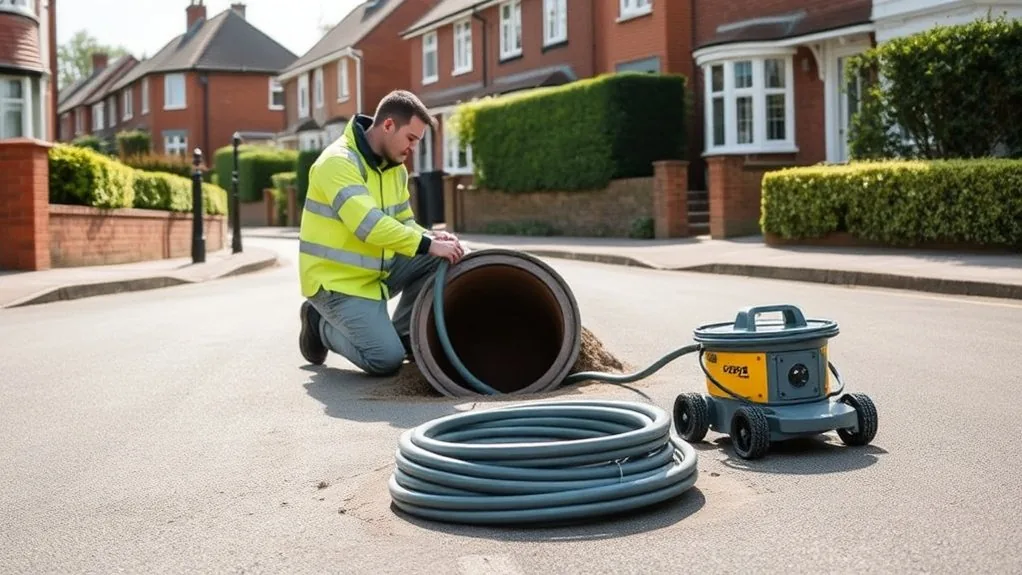
If you have cracked, leaking or root-damaged drains in Rainham, repairing them traditionally can be disruptive and costly.
No-dig drain relining offers a way to restore your pipes from the inside without excavation, using a durable resin liner suitable for various pipe materials.
Call now for a fast quote or emergency callout in Rainham.
Although it’s often compared to a full pipe replacement, drain relining is a no‑dig rehabilitation method that restores the structural integrity and hydraulic performance of damaged drains by installing a resin‑impregnated liner inside the existing pipe. You’re effectively creating a new, jointless pipe within the old one, compatible with most common drain materials, including clay, cast iron, PVC, and concrete.
Using specialist relining techniques, technicians insert and position the liner via existing access points, then cure it with hot water, steam, or UV light so it hardens in place. This forms a corrosion‑resistant, smooth internal surface that improves flow and reduces future blockage risk. You avoid excavation, shorten downtime, and extend asset life while maintaining the original pipe’s route and capacity.
When you start noticing persistent drain blockages, unpleasant odours indoors, damp patches and stains, or slow draining fixtures, it’s often an indication of structural defects within your underground pipework. These symptoms typically point to issues such as cracks, joint displacement, or root ingress that allow effluent to escape and restrict normal flow. By identifying these warning signs early, you can assess whether drain relining is the most effective, non-invasive solution to restore hydraulic performance and prevent further damage to your Rainham property.
If you’re facing recurring slow drains, frequent gurgling, or wastewater backing up even after repeated jetting or rodding, you’re likely dealing with a persistent blockage that indicates underlying pipe damage rather than a simple obstruction. At this point, routine drain maintenance alone won’t resolve the problem; you need a targeted pipe inspection to identify cracks, displaced joints, or deformities that trap debris and cause flow restrictions.
Using CCTV pipe inspection, an engineer can pinpoint structural defects, root ingress, and internal corrosion. When these issues are widespread but the pipe is still structurally viable, no-dig drain relining in Rainham provides a long-term solution, creating a smooth, jointless liner that restores hydraulic efficiency, minimises future blockages, and extends the operational life of your drainage system.
Even before you see visible leaks or damp patches, persistent foul smells indoors can indicate that defects in your underground pipework are allowing sewer gases to escape into the property. When traps are full and appliances are functioning normally, yet odours linger around sinks, floors, or along skirting, you’re likely dealing with cracks, open joints, or root intrusion in buried drains.
These defects allow hydrogen sulphide and methane to migrate into living areas, degrading indoor air quality and creating a corrosive, potentially hazardous environment. No‑dig drain relining seals these pathways by installing a resin-impregnated liner that hardens to form a continuous, jointless pipe. This restores structural integrity, improves odour control, and prevents further gas escape without disruptive excavation around your Rainham property.
Long before water starts visibly pooling, subtle damp patches or yellow‑brown stains on walls, floors, or ceilings can reveal that a damaged underground drain is allowing effluent to migrate into surrounding structures. You’ll often see irregular tide marks, blistering paint, or friable plaster where moisture is wicking through masonry or screed.
These damp patches and stains aren’t just cosmetic; they indicate continuous moisture loading, sulphate attack, and potential mould growth. In Rainham’s mixed housing stock, misdiagnosis as rising damp is common, so you’ll want a CCTV drain survey to confirm whether a fractured or displaced pipe is the source. If it is, no‑dig drain relining creates a seamless internal barrier, halting leakage, stabilising surrounding materials, and preventing further damp staining without disruptive excavation.
Ever noticed baths, sinks, or WCs taking progressively longer to clear, even after you’ve cleaned the traps? That persistent slow discharge often indicates deeper issues within the underground pipework, not just surface debris. Reduced internal diameter from scale, root ingress, or structural deformation can all restrict flow and create chronic sluggish drainage.
Consistent slow draining across multiple fixtures on the same line means you should schedule professional pipe inspection. Using CCTV technology, a specialist can identify cracks, displaced joints, and collapsed sections that normal drain maintenance can’t resolve. If defects are found, no-dig drain relining in Rainham provides a structural liner that restores full bore, improves hydraulic performance, and prevents further infiltration, all without disruptive excavation to your property.
When you’re looking at why drains in Rainham develop defects that require relining, the underlying causes usually fall into a few technical categories: structural deterioration of older clay or pitch-fibre pipes, ground movement from clay-rich soils and subsidence, root ingress through faulty joints, chemical or fat-based corrosion in kitchen and commercial lines, and physical damage from poor installation or heavy surface loading. You’ll typically see:
When you contact us for drain relining in Rainham, we start with a precise diagnosis using CCTV inspection to map defects, depth, and pipe condition. Based on those findings, we use high-pressure water jetting, rodding, or mechanical cutting to remove scale, roots, and obstructions so the host pipe is clean and structurally ready. Only then do we determine whether a localised repair or a full-length lining is the most reliable and cost-effective solution for your system.
Although every drainage system in Rainham has its quirks, our drain relining process always starts with a precise diagnosis using high‑resolution CCTV inspection. We feed a flexible camera through your pipework, capturing live footage and stills that reveal cracks, displaced joints, root ingress, corrosion, and hidden obstructions. Depth, location, and pipe material are all logged to map defects accurately.
You’ll see clear visuals and recorded clips, supported by concise reports, so you understand exactly what’s wrong and where. We also provide Video tutorials to walk you through the findings and explain potential remediation options. From this evidence, we specify whether full-length or patch lining is appropriate and outline Maintenance tips that’ll help you prevent recurring issues and extend pipe lifespan.
Next in the process, we prepare the pipe for relining with targeted high-pressure water jetting to strip away anything that could interfere with the liner’s bond. You get a precisely controlled Hydro jetting service that scours scale, fat, silt, and invasive root hairs from the internal wall of the pipe, restoring hydraulic efficiency and surface cleanliness.
| Aspect | Detail |
|---|---|
| Operating pressures | Typically 3,000–4,000+ psi, matched to pipe type |
| Nozzle selection | Rotating, penetrating, or flushing jets as needed |
| Risk management | Calibrated flow to protect joints and connections |
| Pipe restoration outcome | Clean, keyed surface ready for resin adhesion |
For deposits and defects that water alone can’t shift, we integrate rodding and mechanical clearance to physically break down obstructions and irregularities before relining. You benefit from a targeted, mechanical approach that restores internal pipe geometry so liners bond correctly and flow capacity’s maximised.
We start with a detailed CCTV sewer inspection to map structural defects, heavy scale, root ingress, and hardened FOG (fat, oil, grease). Based on these findings, we select rigid or flexible rods with cutting heads, scrapers, or descaling tools appropriate to your pipe material and diameter.
This controlled process forms part of long-term drain maintenance, removing snag points that could undermine the new liner. It also ensures a clean, mechanically keyed surface, critical for reliable resin adhesion.
Once deposits and defects have been cut back through rodding and mechanical clearance, it becomes clear whether your Rainham drainage system needs a localised repair or a full relining solution. Using CCTV survey data, we evaluate pipe material, wall thickness loss, joint displacement, and active infiltration.
You’ll typically need a localised repair when damage is confined to short sections, such as isolated cracks, root-entry points, or single displaced joints. In these cases, we install patch liners precisely over the fault, preserving sound pipework.
Full drain relining’s recommended when fractures, corrosion, or deformation are widespread. Here, we install a continuous liner, restoring structural integrity along the entire run. We’ll link this to your ongoing drain cleaning and plumbing maintenance plan to prevent recurrence.
Wherever your property’s located in Rainham, you need drain relining support that mobilises quickly and arrives fully prepared. That’s why your call immediately triggers an emergency preparedness workflow: dispatch routing, equipment allocation, and access checks are all handled before the van rolls. Engineers travel with CCTV survey units, inversion drum or patch kits, epoxy resins, robotic cutters, and curing systems, so there’s no downtime sourcing tools.
You’ll get clear ETAs, plus live updates if conditions change. Urban or rural, we factor traffic, site constraints, and pipe depth into our deployment planning to minimise disruption and downtime. Customer testimonials consistently reference rapid attendance, accurate diagnosis, and same-day reinstatement of flow, demonstrating that speed never compromises technical precision or long-term performance.
Speed of attendance is only half the equation; you also need clarity on who’s legally and financially accountable for the defective pipe you’re relining. In Rainham, your responsibility usually covers drains within your property boundary, serving only your home. Shared or public sewers typically fall to the water authority.
| Situation | Likely Responsibility | Why It Matters Emotionally |
|---|---|---|
| Private line inside boundary | You | Direct control, direct cost |
| Shared drain with neighbours | Water company | Less stress, shared obligation |
| Historical plumbing defects | Often homeowner | Frustration with “inherited” issues |
| Pollution / Environmental impact | You / Authority (mixed) | Guilt, urgency to “put it right” |
Technical CCTV surveying precisely defines boundaries so you don’t pay for what isn’t yours.
Although a quality relining dramatically reduces the risk of future failures, you still need a structured maintenance plan to protect the new liner and the surrounding drainage system. Effective preventative maintenance focuses on controlling loading, monitoring condition, and reacting early to anomalies so you maximise drain longevity.
Key actions include:
Long-term performance doesn’t just depend on good maintenance; it starts with how the relining is specified, installed, and tested on day one. You get a full technical assessment using CCTV, flow analysis, and material compatibility checks, so your liner specification matches your pipe diameter, load conditions, and ground movement risks.
We use calibrated, resin-impregnated liners cured in place for a seamless, jointless pipe within your existing drain. Every installation’s verified by post-cure CCTV and thickness measurements to confirm structural integrity and hydraulic capacity.
You’ll also benefit from eco friendly solutions: low-VOC resins, minimal water use, and zero open-cut excavation, reducing waste and disruption. Customer testimonials consistently highlight our punctual reporting, clear defect documentation, and durable, regulation-compliant results across Rainham.
You’ll want clear answers on how fast we can complete drain relining in Rainham, what it’s likely to cost, and whether any safe, temporary DIY steps are realistic. You’ll also need to know if your specific location in Rainham falls within our operational radius and how access constraints on your property might affect response times. In this section, you’ll get concise, technical guidance on each of these points so you can plan the most efficient and cost-effective solution.
How fast can a drain relining team actually get to work on your system in Rainham? In most urgent cases, you’re looking at same-day attendance for initial diagnostics, provided you call before midday and the line is accessible. Engineers typically start with CCTV and plumbing inspections to confirm defects, dimensions, and flow conditions, then specify the liner, resin type, and curing method.
For standard domestic jobs, once access is confirmed and upstream drain maintenance (like jetting and descaling) is completed, the actual relining process often takes just a few hours, with full cure achieved the same day using ambient or hot-water cure systems. Larger commercial or shared systems may require phased works, but disruption is still minimal compared to traditional excavation.
When you ask what drain relining actually costs in Rainham, the honest answer is that it depends on measurable factors like pipe diameter, length to be lined, access conditions, and whether pre-works such as CCTV surveys, jetting, or root cutting are required. As a broad guide, you’re typically looking at roughly £80–£150 per metre for standard domestic pipes, with minimum project values often starting around £400–£600 to cover setup and materials.
Heavier-duty liners, multiple bends, or difficult access points increase costs. Good drain maintenance keeps prices down by limiting scale, fat, and root damage. One of the most practical plumbing tips is to survey early: identifying localised defects lets you reline only what’s necessary, avoiding full-length, higher-cost installations.
Although some drainage issues can be stabilised temporarily with DIY methods, it’s critical to distinguish between simple blockages you can tackle safely and structural defects that require professional drain relining. You can attempt basic DIY fixes such as plunging, using an appropriate non‑corrosive drain cleaner, or deploying a drain rod on accessible pipework. If these don’t restore normal flow, or you notice repeat blockages, foul smells, gurgling, or external wet patches, you’re likely dealing with a damaged pipe.
At that point, further DIY intervention risks worsening fractures, dislodging joints, or compacting deposits. Instead, document symptoms, avoid flushing harsh chemicals, and seek a CCTV survey. As preventive tips, regularly clear gullies, fit drain guards, and avoid disposing of fats, wipes, or rigid debris.
Wondering if your part of Rainham’s covered for drain relining and CCTV surveys? You probably are. We operate across most Rainham plumbing catchments, including major towns, rural villages, industrial estates, and coastal properties. Our coverage is designed around sewer networks, main carriers, and private laterals, not just postcodes, so we can usually reach you even if you’re off the beaten track.
When you contact us, we’ll confirm coverage using your full address, site access details, and drain layout if known. We assess distance to nearest teams, traffic constraints, and equipment requirements (inversion rigs, CCTV crawlers, jetting units). If you’re outside our standard area, we’ll advise on feasibility, call-out costs, and alternative drain maintenance options, ensuring you still get a clear, costed solution.
Yes, drain relining can be carried out on shared or communal drainage systems in Rainham. A CCTV survey is conducted first to identify ownership boundaries and assess the condition of the drains. Approval from all involved parties and compliance with relevant regulations and local water authority standards are required before installation.
Drain relining will not usually affect your home insurance or future property surveys if it is done correctly. You should inform your insurer about the relining and provide certificates, CCTV reports, and warranties. For property surveys, ensure the contractor provides pre- and post-relining footage and lining specifications to confirm compliance with drainage and building standards.
Yes, you can reline drains beneath extensions, conservatories, or outbuildings without disruption. Technicians use CCTV surveys and existing access points to assess pipe conditions and access constraints. They insert a resin-impregnated liner into the pipe, cure it in place, and complete the work without breaking the ground or affecting the building’s operation.
Yes, No-Dig Drain Relining is suitable for managing tree root issues long-term if the roots are properly prepared beforehand. This involves using high-pressure water cutting to remove roots, followed by CCTV inspection. A resin-impregnated liner is then installed and cured to form a continuous structural pipe that seals joints and cracks, preventing root re-entry.
Relined drains in Rainham come with a written warranty covering liner integrity, joint sealing, and resistance to infiltration. This warranty applies if routine drain cleaning and scheduled pipe inspections are maintained. Written certification, CCTV evidence of installation quality, and clear conditions for remedial work are provided.
Need your drains relined in Rainham without disruptive excavation or extended downtime? You can get everything sorted quickly by following a clear, technical process. First, arrange a CCTV pipe inspection so specialists can map defects, locate root ingress, and assess structural integrity. This diagnostic step ensures the relining specification—liner type, resin system, curing method, and coverage length—is accurate.
Next, they’ll clean the host pipe, removing scale, debris, and corrosion to create a stable bonding surface. A tailored liner is then inverted or winched into position and cured in place, forming a seamless, load-bearing barrier.
Once cured, a final CCTV survey verifies flow efficiency, joint sealing, and compliance with best-practice drain maintenance standards—meaning your system’s restored with minimal disruption.