
Trenchless Pipe Replacement in Rainham
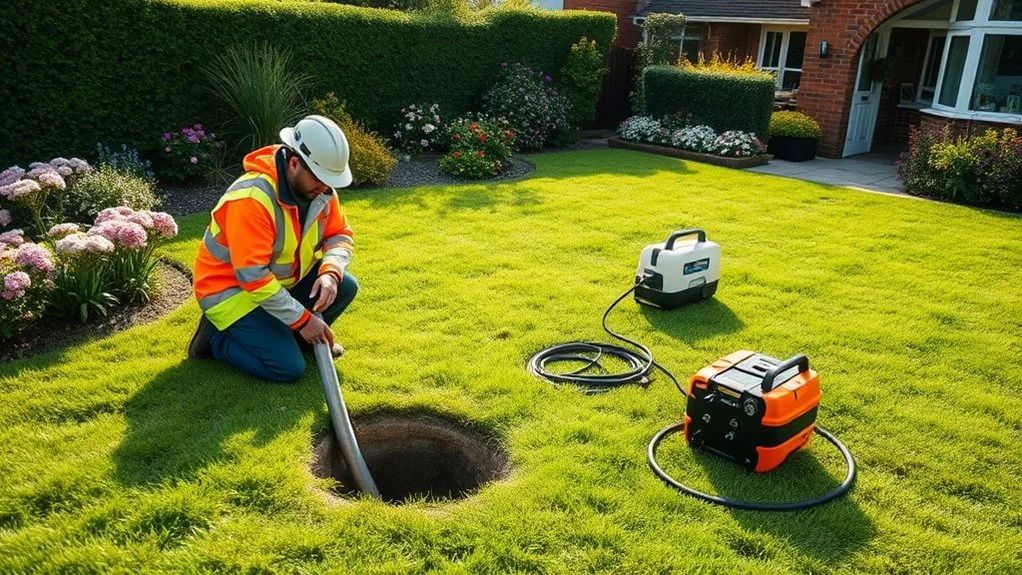
Dealing with recurring blockages, unpleasant odours, or ageing clay and cast-iron drains can be frustrating, especially when traditional repairs disrupt your garden.
Trenchless pipe replacement in Rainham offers a no-dig solution that renews your pipes through small access points, minimising mess and damage.
Call now for a fast quote or emergency callout.
Although it sounds complex, trenchless pipe replacement is simply a method of renewing underground sewer or water lines without excavating a long open trench through your yard. Instead, technicians access the line through one or two small entry points, then use specialized equipment to install a new pipe within, or in place of, the old one.
You’ll typically see two main techniques. Pipe bursting fractures the existing line and pulls a new high‑density polyethylene or similar pipe into the same path. Pipe lining inserts a resin‑saturated liner that hardens in place, creating a seamless new pipe. Both approaches address pipe corrosion, root intrusion, and internal scaling that can reduce water pressure, while keeping surface disruption and restoration costs to a minimum.
When sewer or water lines start failing, you don’t always see a dramatic flood or sinkhole, but certain warning signs mean it’s time to contemplate trenchless pipe replacement instead of another quick patch. You’ll typically need it when underlying defects are widespread, recurring, or linked to ageing pipe material rather than a single blockage.
Consider trenchless replacement if you notice:
You’ll go through a precise, step-by-step trenchless process that starts with a camera-based initial pipe inspection to pinpoint issues without disturbing your yard. From there, technicians create small access points, insert and cure a new liner inside the existing pipe, and restore structural integrity from within. Finally, they perform pressure and flow testing, confirm proper operation, and complete a thorough cleanup so your garden stays intact.
Before any trenchless pipe replacement begins, a thorough initial inspection confirms exactly what’s happening underground and whether no-dig methods are suitable for your line. Your engineer will usually start by reviewing drawings, access history, and visible signs of failure, then deploy a CCTV camera through the existing pipe run.
During this survey, they’ll assess pipe material, diameter, gradient, and joint condition, while recording high‑definition footage for later analysis. They’ll identify root intrusion, misaligned joints, pipe corrosion, scale build-up, or structural cracks, and measure the affected length precisely.
This diagnostic stage lets you avoid guesswork. You’ll know if a full replacement is required, which trenchless technique fits best, and whether any sections need localised repairs before the main installation proceeds.
Although everything’s happening underground, trenchless replacement still needs small, carefully positioned access points so the new pipe can be installed without opening up your whole yard. Your technician identifies existing entry options first—manholes, cleanouts, or utility rooms—then plans any minimal excavations around your Garden landscaping, not through it.
These access points are usually no bigger than a paving slab and placed to allow straight, controlled paths for equipment and Pipe materials.
| What you see above ground | What’s happening below ground |
|---|---|
| Small, neat pit | Precise pipe entry/exit |
| Protected lawn edges | Bypass of tree roots |
| Covered flowerbeds | Guided tooling path |
| Clean paving cut | Connection to existing line |
| Tidy temporary barriers | Safe work zone for technicians |
Every opening is measured, documented, and reinstated carefully once testing’s complete.
Once access points are ready, the new liner is carefully fed into the existing pipe run, guided from one opening to the next so the old line effectively becomes a mold for the replacement. The liner’s a flexible tube, saturated with resin precisely matched to your pipe materials and operating conditions.
Technicians use calibrated equipment to invert or pull the liner into place, ensuring it sits tight against every bend and junction. Pressure and curing systems then harden the resin, forming a jointless, corrosion‑resistant pipe within your old one.
Throughout, engineers confirm thickness, flow capacity, and compatibility so your new liner meets design specs and local regulations. This targeted approach simplifies cost analysis, cutting labour, reinstatement, and disruption compared with full excavation.
When curing’s complete and the liner’s locked in place, technicians shift straight into verification and restoration so you’re left with a proven system and a clean site, not a construction zone. They’ll run a final CCTV inspection to confirm the new pipe material is fully bonded, correctly aligned, and free of defects or obstructions.
Hydraulic tests then verify flow capacity and watertight performance, ensuring your system’s ready for long‑term service.
| Step | Purpose |
|---|---|
| CCTV inspection | Visually confirm liner integrity |
| Flow / leak testing | Verify performance under real conditions |
| Lateral connection check | Ensure every branch is open and smooth |
| Site sweep and washdown | Remove residual materials and footprints |
| Garden reinstatement | Protect turf, beds, and garden aesthetics |
Finally, surfaces are tidied so your garden looks untouched.
Instead of assuming you must tear up your yard to fix failing pipes, it helps to compare trenchless pipe replacement with traditional excavation regarding access, impact, cost, and long‑term performance. With trenchless methods, access is gained through small entry pits, so you’re not exposing the entire run of pipe or disturbing healthy soil, which directly reduces environmental impact.
Traditional excavation removes large soil volumes, risks damaging nearby services, and often forces you to reinstate drives, patios, and landscaping. Trenchless techniques install a high‑grade pipe material inside or in place of the old line, achieving equivalent or better structural strength without prolonged open trenches. While project pricing depends on depth, length, and pipe material, trenchless work typically delivers tighter, more predictable costs.
After seeing how trenchless methods stack up against open excavation, it’s easier to focus on the specific advantages they bring to your property. Trenchless pipe replacement lets you upgrade failing drains and sewers without turning your garden into a building site, while still meeting rigorous technical standards.
Whether you’re managing a home or a commercial site, trenchless pipe replacement adapts to very different demands while using the same core technology. In domestic settings, it lets you renew ageing drains beneath driveways, extensions, and garden landscaping without excavating lawns, patios, or borders. You protect surface finishes while resolving root ingress, subsidence-related cracks, or misaligned joints.
For commercial properties, you can address high-usage waste lines, shared drainage, and complex service runs beneath car parks or access roads with minimal disruption to trading or tenants. Modern pipe materials and liners are engineered for chemical resistance, pressure, and flow performance, so they suit kitchens, washrooms, and industrial areas alike. In both cases, CCTV diagnostics guarantee the method precisely matches your pipe condition.
Across Rainham, the same trenchless techniques used in homes and commercial sites are delivered as a structured, end‑to‑end service. You get a clear sequence: CCTV survey, condition report, design of replacement route, and installation using cured‑in‑place lining or pipe bursting, depending on existing pipe material and depth.
We plan access points to avoid disrupting garden landscaping, driveways, and paths, so your surface finishes stay intact while underground defects are fully resolved.
| Stage | What You Can Expect |
|---|---|
| Investigation | HD CCTV, mapping, and precise fault location |
| Design & Specification | Pipe material selection and hydraulic sizing |
| Trenchless Installation | Localised access, rapid cure, post‑installation test |
Because underground problems need more than just the right equipment, you get a team that specialises exclusively in trenchless pipe replacement, with engineers trained in both civil drainage and no‑dig rehabilitation. We don’t guess what’s under your lawn; we interpret survey data in its historical context, understanding how older ceramic, pitch fibre, or cast‑iron networks behave compared with modern materials.
You benefit from methodical diagnosis, transparent reporting, and a design that targets root causes, not just visible symptoms. Our trenchless techniques minimise environmental impact by reducing soil disturbance, waste generation, and heavy‑plant movements around your property. We coordinate with local utilities and follow Water Industry Specifications, so your replacement integrates safely with public sewers and private drains, protecting both your home and the wider network.
You probably want to know how long trenchless pipe replacement takes, whether it’s more cost‑effective than open‑cut digging, and if your part of Rainham is covered. Here, you’ll get clear, technical answers so you can plan timings, budget, and any access needs with confidence. We’ll address each of these common questions directly, so you know exactly what to expect before any work starts.
Most trenchless pipe replacement projects are completed in a single day, but the exact timeline depends on pipe length, depth, soil conditions, and access points. In many Rainham properties you’ll see 4–8 hours on-site, provided existing pipe materials and connections are straightforward and fully compliant with local plumbing regulations.
Below is a typical timeframe breakdown:
| Stage | Typical Duration | Notes |
|---|---|---|
| Initial CCTV survey | 30–60 minutes | Confirms length, defects, junctions |
| Site setup & access pits | 1–2 hours | Small, targeted excavations |
| Pipe bursting/lining run | 1–3 hours | Main replacement phase |
| Connection & testing | 1–2 hours | Pressure and flow checks |
| Backfill & tidy-up | 1–2 hours | Reinstate surfaces, clear site |
Larger or more complex systems may extend into a second day, but disruption remains minimal.
In many Rainham properties, trenchless pipe replacement is competitively priced with – and often cheaper than – traditional open-cut digging once all direct and hidden costs are counted. When you look beyond the basic quote and do a full cost comparison, you’ll factor in reinstating driveways, landscaping, patios, and any disruption to outbuildings or utilities.
With trenchless methods, you’re usually paying for specialist equipment and skilled labour, but you avoid extensive excavation, cart‑away charges, and long reinstatement times. Modern liners and HDPE pipe give you durable material options that can outlast many older clay or pitch fibre systems, reducing future repair spend. Overall, if access is suitable, you’ll typically find trenchless offers lower lifecycle cost and far less disruption.
Homeowners quickly weighing up trenchless vs digging often ask the next logical question: whether this specialist service is available where they live in Rainham. You’ll be reassured to know we cover the vast majority of Rainham, including urban areas, villages, and rural properties with restricted access or sensitive garden aesthetics.
Our survey team confirms suitability on-site, checking depths, access points, underground utilities, and existing pipe materials. Whether you’ve got clay, pitch fibre, uPVC, or cast iron drains, we’ll advise if trenchless replacement is technically viable at your postcode.
If your location’s on the fringe of Rainham, we’ll still assess it and either schedule a visit or recommend trusted partners—so you’re not left guessing about options or costs.
Yes, trenchless pipe replacement can increase the value of your Rainham property. This method causes less disruption and preserves landscaping, which buyers appreciate. It also reduces the risk of leaks and blockages, leading to better survey reports and potentially higher offers.
Yes, trenchless methods can generally be used on shared or neighbour-linked drainage systems. Engineers conduct a CCTV survey to assess the system, confirm ownership and legal responsibilities, and then plan a suitable trenchless solution such as lining or pipe bursting. With proper access and agreements, this approach minimises disruption and helps avoid boundary disputes and extensive excavation.
Prepare your home and garden by clearing access routes to manholes, internal pipes, and the driveway. Move pots, furniture, and fragile items to protect them during garden maintenance work. Keep pets and children indoors for safety. Mark buried services if you know their locations and open side gates. Inside, clear space near drains, protect flooring with old sheets, and note any leaks or odours to inform the technicians on arrival.
Yes, there are temporary water usage restrictions during trenchless replacement work. Water use must be avoided while the lining cures or new pipe connections set. Your technician will provide specific timeframes and instructions for post-work water use to ensure the pipe stabilises properly.
Trenchless replacement materials typically come with a long-term warranty on the pipe, covering issues such as corrosion, leakage, and structural failure. Labour for installation is generally covered by a separate workmanship warranty, protecting against faults like joint failure, incorrect gradients, or leaking connections. It is important to obtain written terms detailing coverage, exclusions such as ground movement or misuse, and the procedure for making a claim.
When you’re ready to fix failing pipes without tearing up your yard, getting a precise quote for trenchless pipe replacement is the first step. You’ll get clear costs, an accurate timescale, and a method statement that protects garden aesthetics while restoring full pipe performance and simplifying long‑term plumbing maintenance.
| What we assess | Why it matters | How it affects your quote |
|---|---|---|
| Pipe material & size | Determines lining or bursting method | Influences equipment and resin use |
| Pipe length & depth | Impacts access and curing time | Alters labour requirements |
| Damage type & severity | Guides repair vs replacement approach | Affects scope of works |
| Access points & entries | Minimises surface disruption | Reduces reinstatement allowances |
| Soil & groundwater | Affects curing and safety controls | May require additional protections |
Share your details today for a tailored, itemised quotation.